Most architects design without knowing if the design is affordable for their clients.
We surveyed 48 residential and commercial architects to find out how cost estimating actually works inside their firms.1
Here's what we found.
How long architects wait for estimates
Architects wait 15 business days on average for a construction estimate. Some wait as long as 45. (If you've ever had a client ask "why is this taking so long" during that stretch, you already know how that conversation goes.)
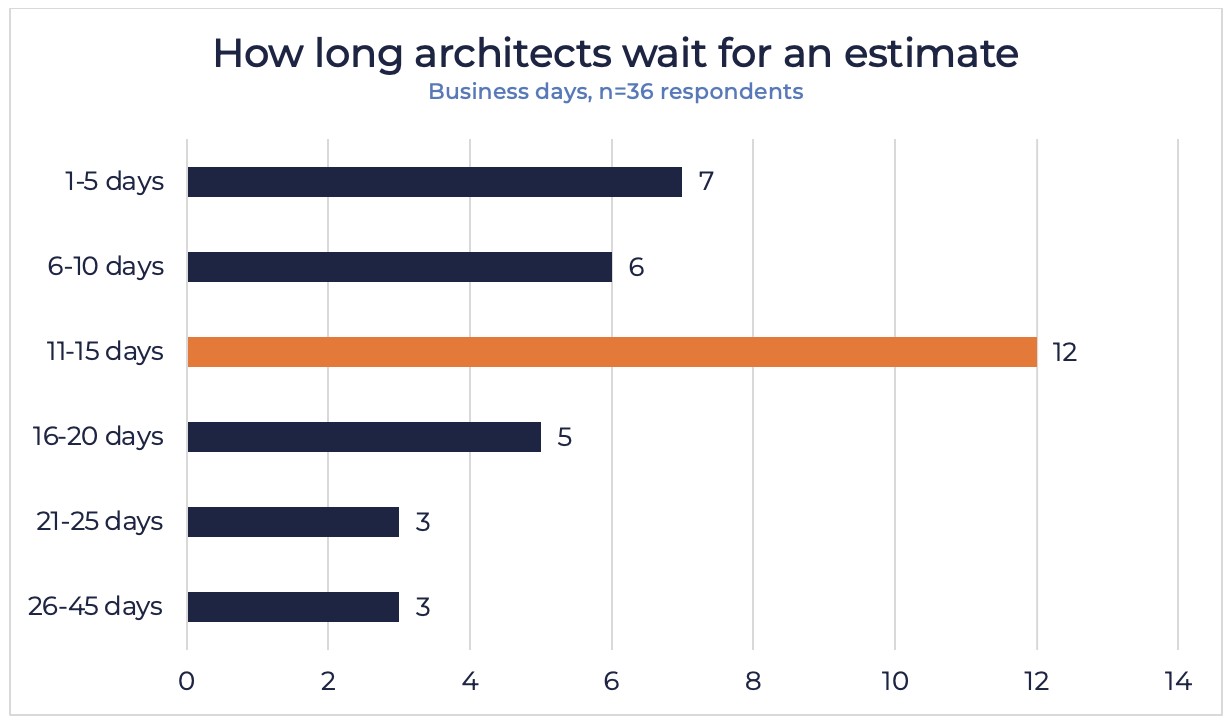
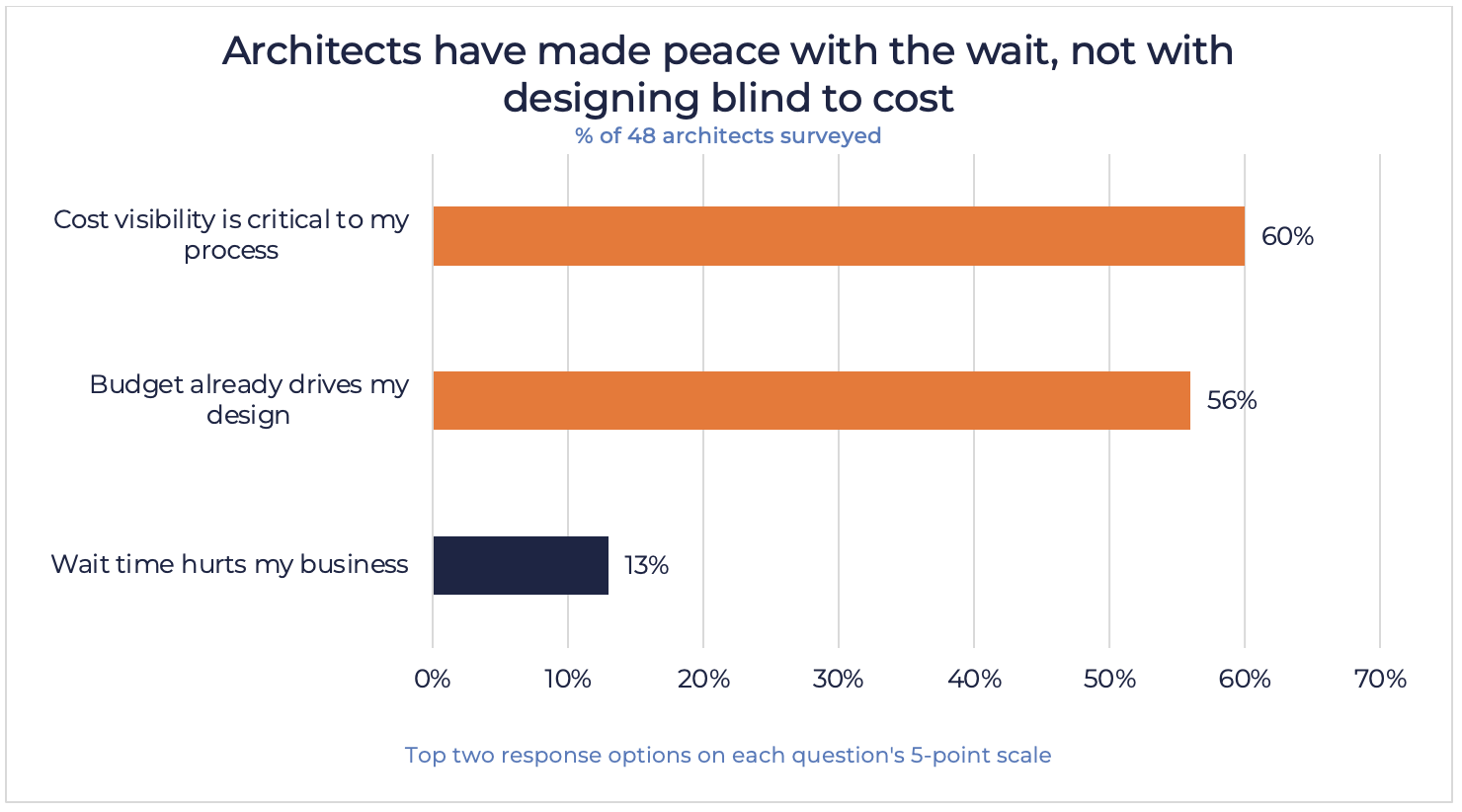
Only 13% call the wait itself highly disruptive, which surprised us at first. It's not because the wait is free. Projects stall, client conversations stall, momentum stalls. It's just accepted as the cost of doing business because nobody's ever offered a real alternative.
How architects get to a number today
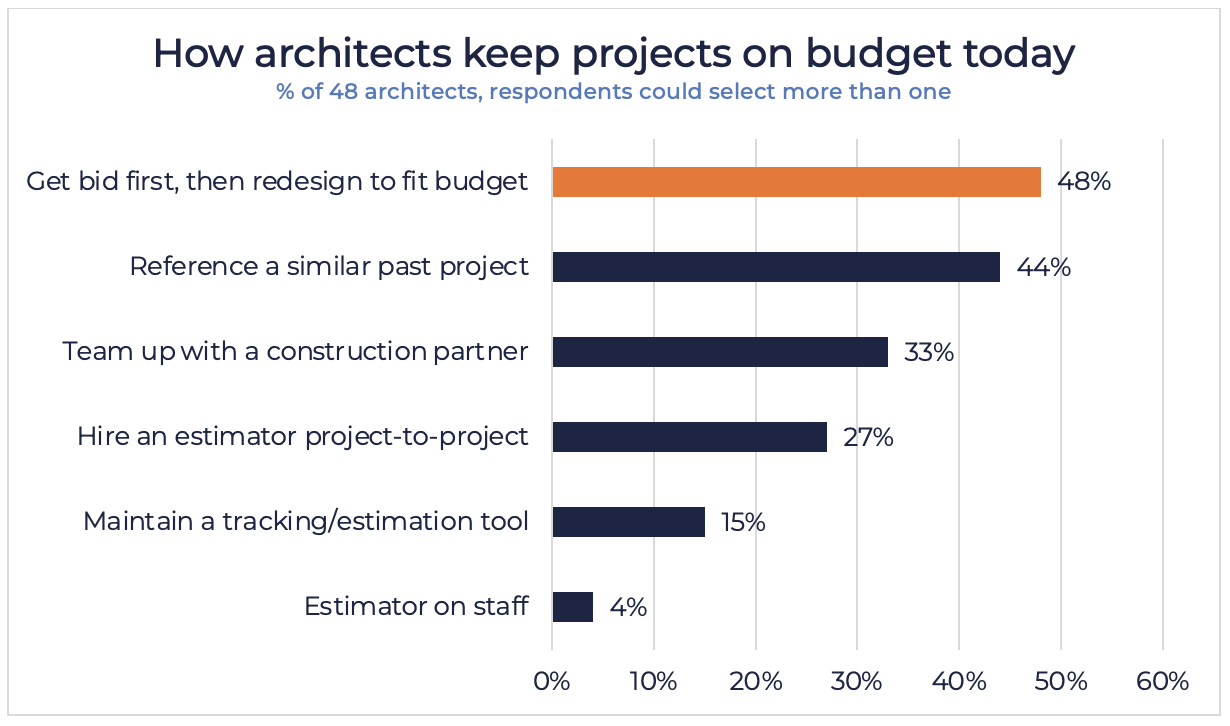
Architects lean on getting a bid from a contractor then redesigning when it's over budget, referencing a past project that's similar, or bringing in an estimator. About half of respondents relied on two or three methods to feel more confident.
Architects want estimates sooner than they get them
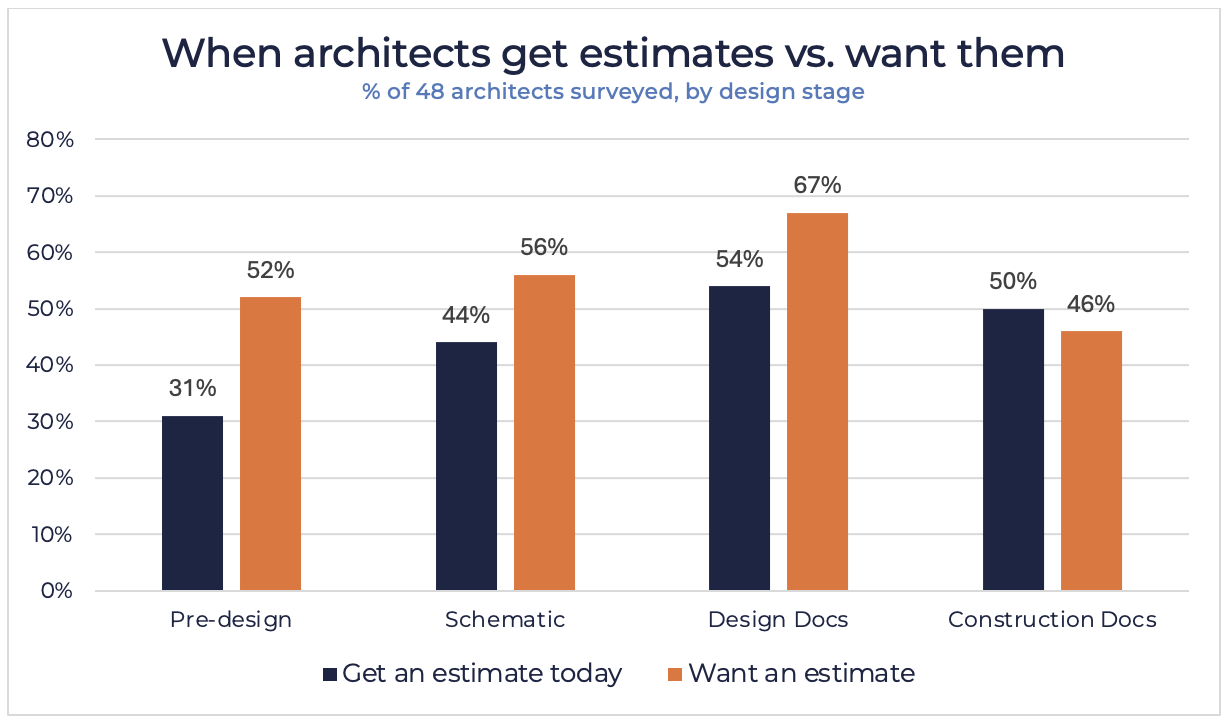
At pre-design, the stage where changes are cheapest to make, only 31% of architects get a cost estimate, even though 52% want one. That's the widest gap of any stage. By construction docs it flips: estimates are common by then, but the big decisions are already made. Going over budget at that point means a redesign.
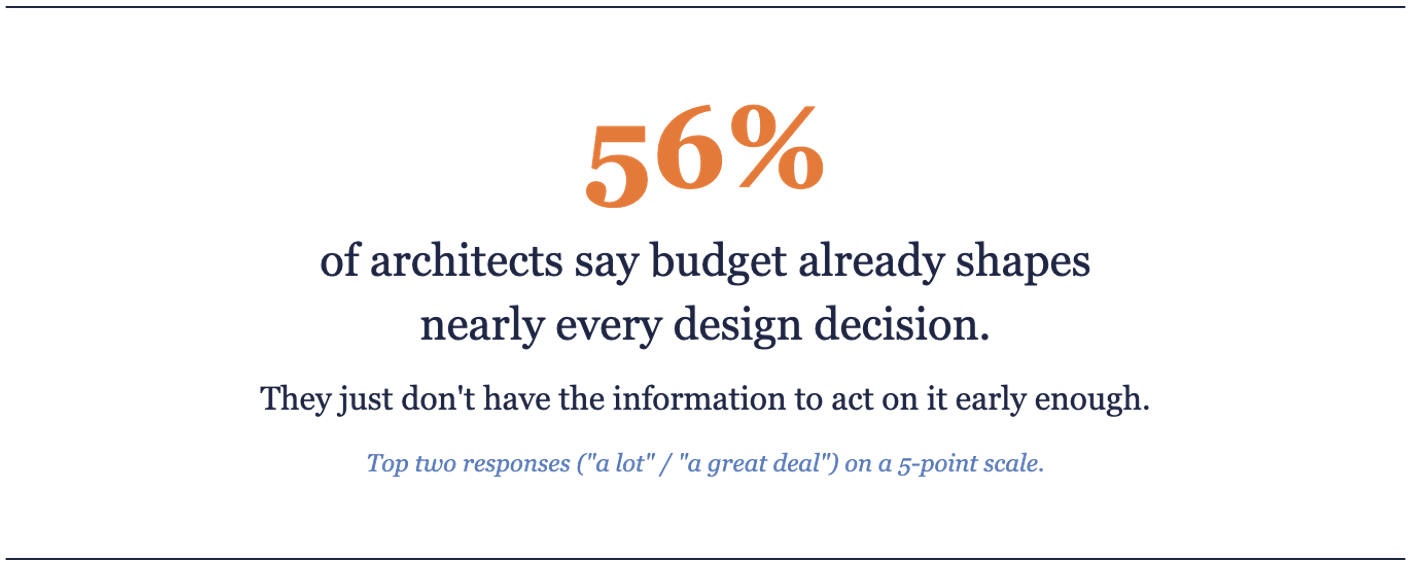
56% of architects say budgets shape design decisions even if there is no cost visibility. If a client gave a number, it's been sitting in the architect's head since day one. What's missing is confirmation on which decisions keep them under it. They know where they're supposed to land. Nothing tells them if they're on course until a bid shows up, usually with bad news.
Good design decisions need good information while they're being made, not weeks or months after. We're building tools to do just that.
Learn more about how Constructus helps architects with early cost visibility at https://constructus.io.
Footnotes
-
Most who responded are principals or owners (81%), running small firms (71% have fewer than 10 people). Not every respondent answered every question, so sample sizes vary by stat. ↩